
An Adult Produces a Child, or a Child Makes One an Adult?
There is something curious about the protests in countries as different as Bangladesh, Nepal, India and France. Again and again, the young have emerged at the front of the crowd, sometimes triggering the protests themselves, sometimes giving voice to a discontent that others have been reluctant to express.
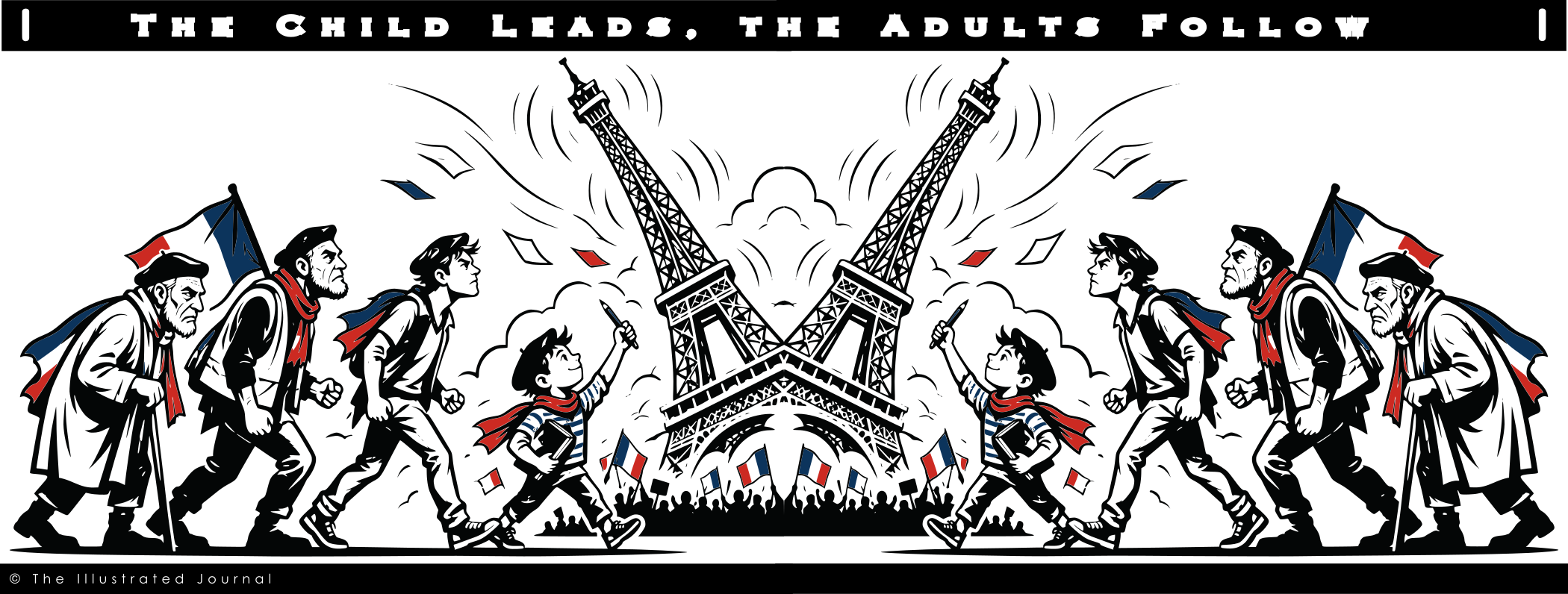
It is not necessarily the intellectuals, the established thinkers or the guardians of civil society who have set things in motion. Often, it is those who are on the threshold of adulthood, or have only just crossed it. They are the ones asking uncomfortable questions and challenging authority.
Of course, protests can be amplified, redirected or exploited by political interests and other groups. That is a separate question, worth examining in its own right. For now, there is something else to consider.
We as adults are supposed to set an example. Children learn by watching us: how we behave, what we tolerate, what we stand up for and what we quietly accept. Much of what we call growing up is simply the process of absorbing these lessons, consciously or otherwise. We expect the young to follow the example we set, and eventually become responsible adults in their own right.
The protests seems to have reversed this accepted notion or the direction.
It is the young who appear increasingly willing to take the first step, to question what they have inherited and to demand what they believe is rightfully theirs. The adults, who were expected to lead, find themselves following. Some join the march; others watch from the sidelines, perhaps surprised that those they once guided are now showing them the way.
Does this mean that the younger generation is wiser, or that adults have become less courageous? That would be too easy a conclusion. Youth brings its own impatience and blind spots; experience can offer judgement as well as caution. Neither age nor youth guarantees the right answer.
But perhaps the more important question is this: when the young have to lead the way, what does that say about the example the adults have set?
An adult brings a child into the world. The child grows up by watching the adult. And then, one day, the child steps forward, leaving the adult with a choice: to follow, to resist, or to reconsider what growing up means.
A related reflection
In India at 80, the reflection on youth-led protests takes the thought further: when young people challenge the status quo and lead the demand for change, what does it reveal about the country they are inheriting and the example today’s adults have set?
BECOME A PATRON
KEEP INDEPENDENT WRITING ALIVE
Reader support is what keeps The Illustrated Journal independent. Help keep the space be independent, uncluttered, and freely accessible to everyone.


